The Swing of Poetry: Musings on Stevenson

Three years ago today, my first contribution to All Nine Muses was published. I still can’t thank Chief Muse Kelly Belmonte enough for her vote of confidence in giving me this opportunity, and all my fellow Muses for their support and encouragement.

Kelly Belmonte's avatarAll Nine

All Nine welcomes Rebeka Choat to share her musings on Robert Louis Stevenson. Becka is a reader, a writer, a lover of the printed word, dedicated to bringing people books to nourish mind, soul, and spirit.  Her website is www.booksbybecka.com.

Image by Rebeka Choat

The Swing of Poetry: Musings on Robert Louis Stevenson’s “The Swing” 

by Rebeka Choat 

How do you like to go up in a swing,
Up in the air so blue?
Oh, I do think it the pleasantest thing
Ever a child can do!

Up in the air and over the wall,

Till I can see so wide,
River and trees and cattle and all
Over the countryside —

Till I look down on the garden green,

Down on the roof so brown —
Up in the air I go flying again,
Up in the air and down!

~ Robert Louis Stevenson

Early some mornings before…

View original post 288 more words

How Calming

Becka Choat's avatarAll Nine

Image by Becka Choat Image by Becka Choat

How Calming

By Becka Choat

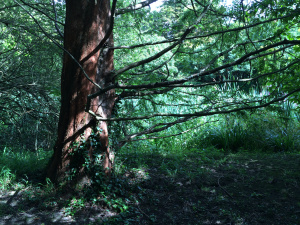
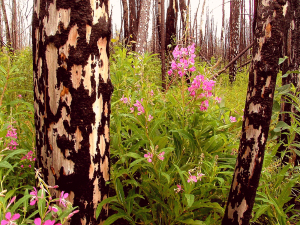
How calming, the woods:
sun-spangled shade, tangled roots,
unexhausted earth.

[A found poem from Chaim Potok’s Old Men at Midnight.]

*****

Becka Choat is a lifelong lover of words who spends many hours each week in a room of her own, writing or reading and drinking coffee. Her book reviews can be found at www.beckasbookreview.wordpress.com, and her poetry and other musings at www.beckachoat.wordpress.com. You may also follow @beckachoat and/or @booksbybecka on Twitter

View original post

Tuesday’s Word: remember

remember (v): to bring to mind or think of again; to retain in the memory

“Remembering is hard,” Pastor Preston said in his sermon a few weeks ago. It’s a truth borne out not only by the anecdotes of his own forgetfulness; most of us have at least occasional lapses of memory, brought to our attention by the officer who tickets us for our expired auto registration, or the friend who calls to say she’s been waiting fifteen minutes already at the meeting place we agreed on last Friday. We remember, right after the smoke alarm goes off, that the cookies need to come out of the oven; we’re jolted from near sleep when we realize, as we check off the accomplishments of the day, that we forgot to send our mother-in-law a birthday card.

Ann Voskamp, in One Thousand Gifts, muses that ‘remembering is an act of thanksgiving, a way of thanksgiving, this turn of the heart over time’s shoulder to see all the long way His arms have carried us.’ This is the kind of remembering Preston wanted to direct us toward that Sunday before Thanksgiving; the practice of being mindful, of remembering how many things we forget to say ‘thank you’ for throughout the year, throughout our lives. It is good to be exhorted to recall with gratitude the many blessings we so often fail to count.

But for many people, remembering is hard in a different way, more pronouncedly during the holidays than at other times of year. The problem for them is not that they don’t remember – it’s that they do, in stark, vivid detail. In their minds, images of happy families gathering on the television screen are overwritten with mental home movies of domestic dysfunction; displays of abundance are reminders of lack; cheery music is drowned out by the roar of hurtful words whose echoes never fade.

I’ve spent more than one Christmas season in the depths of depression myself; yet, even with my experience there, I can’t give an authoritative answer to the question of how to help someone for whom this time of year is tough. One size doesn’t fit all.

Going out with friends may be uplifting for one person, while it’s just too much effort for another. ‘Retail therapy’ might feel like a trip directly through Hell for some. Being welcomed to a boisterous Christmas party could revitalize others. The bright, jingly songs that make one feel better may make another want to scream.

Practical assistance is valuable in some cases. Taking someone’s car to get the oil changed could shorten his impossible to-do list enough to give him a little breathing space. An overwhelmed mother might be more grateful than you can imagine if you would take her kids to see Santa along with yours.

Emotional support is sometimes more important. Talking through old hurts with a sympathetic listener is often a necessary step toward healing, as is feeling safe enough with someone to share secret fears and hidden shame. An answering voice on the phone at 2:00 a.m. can be a very real lifeline.

In the end, I think it all comes down to presence. It can probably never be said enough times: the assurance that you are not alone somehow makes just about anything more bearable. If you know someone who is struggling this season, making yourself available – really, truly, physically and emotionally available – to them, in whatever capacity they need, may well be the gift that gets them through.

Here I Begin Again

Becka Choat's avatarAll Nine

Since Kelly announced the theme for this month’s musings, I’ve been thinking about the words that signal new beginnings: “I present to you the graduating class of 2014.”  “I do.” “SOLD.”  “It’s a girl!” These are joyful, often long-anticipated, celebratory occasions. But sometimes, the places of starting over are marked by words that sound remarkably like endings: “We’re downsizing – letting you go.”  “This isn’t working anymore.” “We can treat the symptoms, but there’s no cure.” The earth crumbles under our feet. Gravity reverses. We can’t possibly go on – but we do, because we must. We gradually remember how to speak, figure out which way is up, learn how to walk again.

Image by Brad Harrison via FreeImages.com Image by Brad Harrison via FreeImages.com

The stars black out.
The world spins crazily,
and I shut my eyes tight
and hold on, just hold on,
until it slows and steadies again.
I breathe deep, find my…

View original post 139 more words

Field Surgery

It feels like living in a minefield, this walking through depression; an achingly slow process of unearthing harmful things buried deep for years, fearing the fallout of their exposure to air and light, knowing absolutely that they must be pried out to make the soil safe for building on and planting in.

Some of the mines are easily discovered and, by the grace of God, disarmed fairly quickly, with minimal damage.

You know the general area where some of the mines are located, and you know that they are going to explode when you try to move them. So you make plans and equip yourself as best you can with God’s great help, and avoid them until you feel strengthened for the task.

But one day you are walking along unconcernedly over ground that has been swept many times, ground that you believe has been completely cleared, and a land mine blows up directly beneath your feet, ripping you to stunned little shreds.

The best you can hope is that it happens when you are walking in company with friends, friends who are just far enough off not to be injured in the blast but near enough to rush to your aid. They assess your wounds when you cannot, and discern that immediate attention is required – here, now, even with nothing to dull the pain. The field surgeon, wounded himself, steps forward to take charge, but your friends stay to help. They are obedient to the surgeon’s instructions, doing what must be done as firmly as necessary and as tenderly as possible. When it is over, they stay with you still, holding you, murmuring prayers, singing lullabies in the dark, until you are strong enough again to stand, to walk on.

The Life of Words

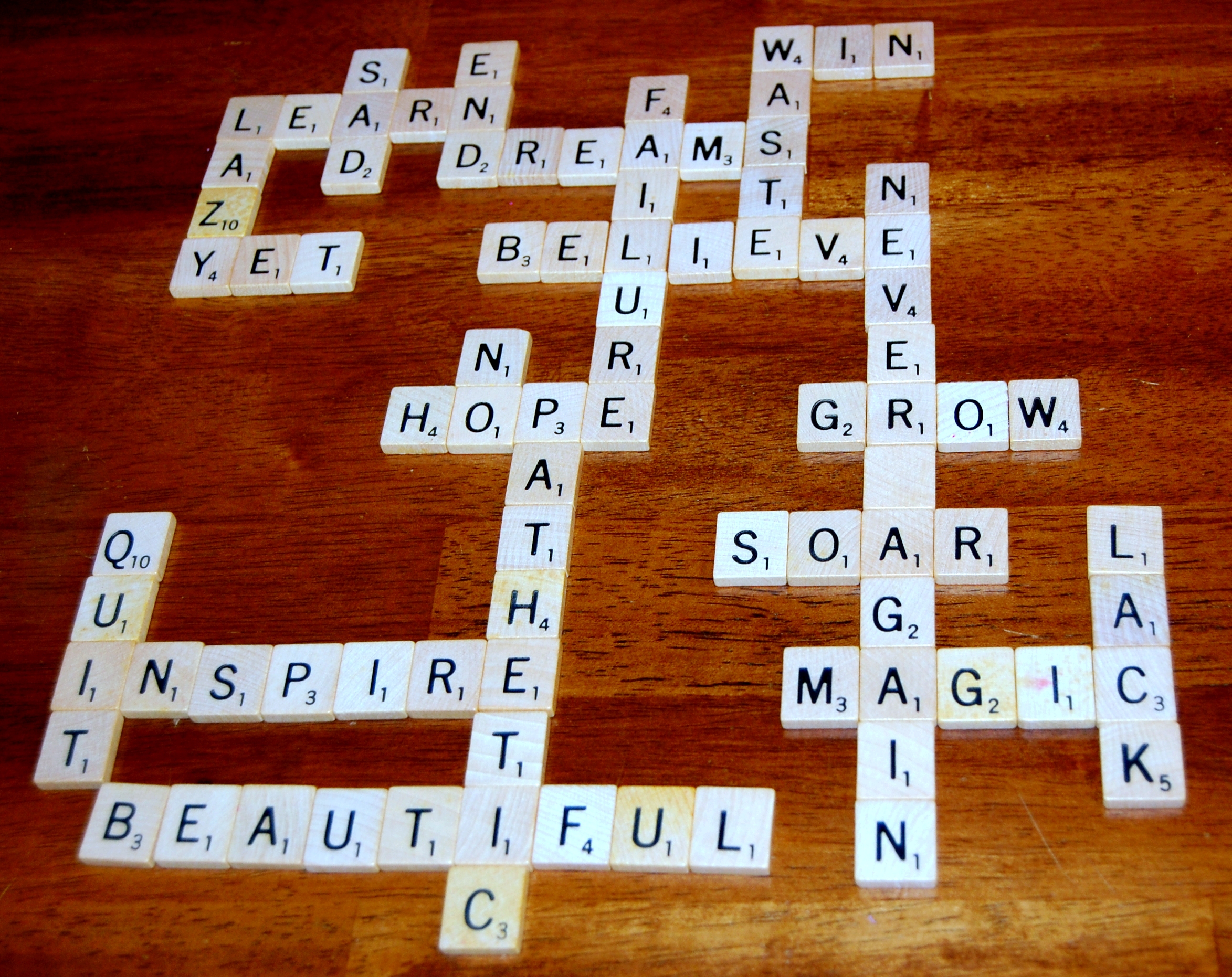
image copyright Rebekah Choat

image copyright Rebekah Choat

A word is dead
When it is said,
Some say.

I say it just
Begins to live
That day.

~ Emily Dickinson

A word is dead when it is said, some say.

Dead things do not change (except to decay). There is nothing pulsing inside them. They do not grow or stretch or think. They are cold, stiff, unfeeling. They do not change direction. They do not respond. They are finished, over, chiseled in stone.

Some words, it seems, die quietly, of plain old age and disuse. Their passing, if we are even aware of it, doesn’t affect us much. They’re a little like the great aunts we might have met once at a family reunion when we were very young, the ones whose pictures look vaguely familiar when we flip through old albums. We may recognize them with a half-smile, murmur something about what interesting lives they must have had, and forget them once the page is turned. Widdershins, for example: she was a fine old character, but she only appeared once or twice on the periphery of my experience. And remember ugsome? Not really, but I heard an amusing story about her once. I can’t honestly say I miss them, or even notice their absence from day to day.

It’s harder to accept the loss of words that have been waylaid and maimed. You know the ones I mean. Queer. Retard. Gay. A dozen others now declining in similar fashion. Like beloved grandparents ravaged by Alzheimer’s Disease, their appearance hasn’t changed, but the meaning, the personality behind the face, is so altered as to be almost unrecognizable. The body is still here, but we mourn the death of the original spirit.

Then, sadly, there are words that meet violent ends – maybe sometimes as accidental casualties of simple carelessness, but sometimes through malice aforethought. Some say words in such a way that they fall, already lifeless, from their lips.

Who are these some, and what are the death sentences they pronounce? Absolute literalists: “That’s what the Bible says. Period.” Hopeless fatalists: “The doctor said it’s incurable.” Immovable traditionalists: “It’s sacrilegious to change the old way of saying things.” Smug pedagogues: “It means what I say it means. How dare you question my authority?” Harsh critics: “You’re never going to be any good.” Implacable parents: “Don’t ask again. That’s my final word on the matter.” To all of these, a word is dead when it is said.


I say it just begins to live that day.

Living things breathe. They are warm and fluid. They grow, they ripen. They move and change and interact with other living things. They feel and remember and dream. They have the power to engender more life.

I am awed by the innate power, the pulsing life of words. I believe that when we speak or write them, we give words birth. And like children, they fare forth and grow in ways we don’t always expect. It’s a risk, sending our words (and our kids) out into the wide world, among people who neither know nor care what pains we took to plan and prepare and present the fruits of our labors. We can’t be sure that they will be understood and appreciated for what we think they are; in fact, it’s more certain that they sometimes won’t be. And this is the frightening and freeing mystery.

“…our works never mean to others quite what we intended; because we
are re-combining elements made by Him and already containing His
meanings. Because of those divine meanings in our materials it is
impossible that we should ever know the whole meaning of our own
works, and the meaning we never intended may be the best and
truest one,” C.S. Lewis says in “Bluspels and Flalansferes.”

We do the best we can, as writers, as speakers, as parents. We struggle to make our ideas clear, to impart our values, to get everything just right. We invest ourselves, body, mind, and soul, in our offspring of flesh and blood, pitch and timbre, paper and ink. And then we let them go, trusting them to the Omnipotence, knowing they will go places and touch people we will never see, in ways we can’t anticipate. We understand, if only dimly, that although we gave them birth, the breath of life within them is not of our making, not subject to our control, not dependent upon us. We are, at best, conduits. When we allow echoes of the Word that spoke the world into existence to flow through us, they begin to live that day.


This piece was first published as “A Word Is Dead” on http://www.allninemuses.wordpress.com on September 9, 2012
 

The Naked Seed

image by Joel Brotzman

image by Joel Brotzman

My heart is empty.  All the fountains that should run
With longing, are in me
Dried up.  In all my countryside there is not one
That drips to find the sea.
I have no care for anything thy love can grant
Except the moment’s vain
And hardly noticed filling of the moment’s want
And to be free from pain.

Oh, thou that are unwearying, that dost neither sleep
Nor slumber, who didst take
All care for Lazarus in the careless tomb, oh keep
Watch for me till I wake.
If thou think for me what I cannot think, if thou
Desire for me what I
Cannot desire, my soul’s interior Form, though now
Deep-buried, will not die,
–No more than the insensible dropp’d seed which grows
Through winter ripe for birth
Because, while it forgets, the heaven remembering throws
Sweet influence still on earth,
–Because the heaven, moved moth-like by thy beauty, goes
Still turning round the earth.

~ C.S. Lewis

waiting it out…

It’s so obvious I never even saw it until a couple days ago.  A friend and I were talking about how hard things can be, even and especially during the holidays.  He was reeling from the sucker punch of a less-recent blow combined with a fresh jab, I was nursing a new sore spot in a long history of bruises, and things began connecting in my mind in a way they hadn’t before.

I’ve been familiar for years with the problems of undiagnosed illnesses and hidden injuries and the understanding that these things have to be found and examined and treated before healing can begin. But this season I’m learning another aspect of how old wounds continue to manifest. I’m learning, really learning, that healing is rarely if ever complete in this life, and never neat and linear. I’m discovering that even after infected areas are cleaned and bones are set and therapy is done, the aches and pains still flare up when I’m overtired, when the weather changes, when someone unknowingly jars me at the site of an old injury.

Of course this is how it is. How could it be otherwise? And of course it will pass. This flare-up will wind down and all days won’t be so hard and glimpses of joy will surprise me from unexpected places. This is just one of the days when I have to wait it out, drawing strength and comfort from the prayers of friends, and from words I came across in Richard Rohr’s Daily Meditation this morning:  “But the goal (in contemplation, in prayer, maybe in just getting through the day) is not success at all, only the practice itself.” (parenthetical statement mine)

A Mother’s Prayer

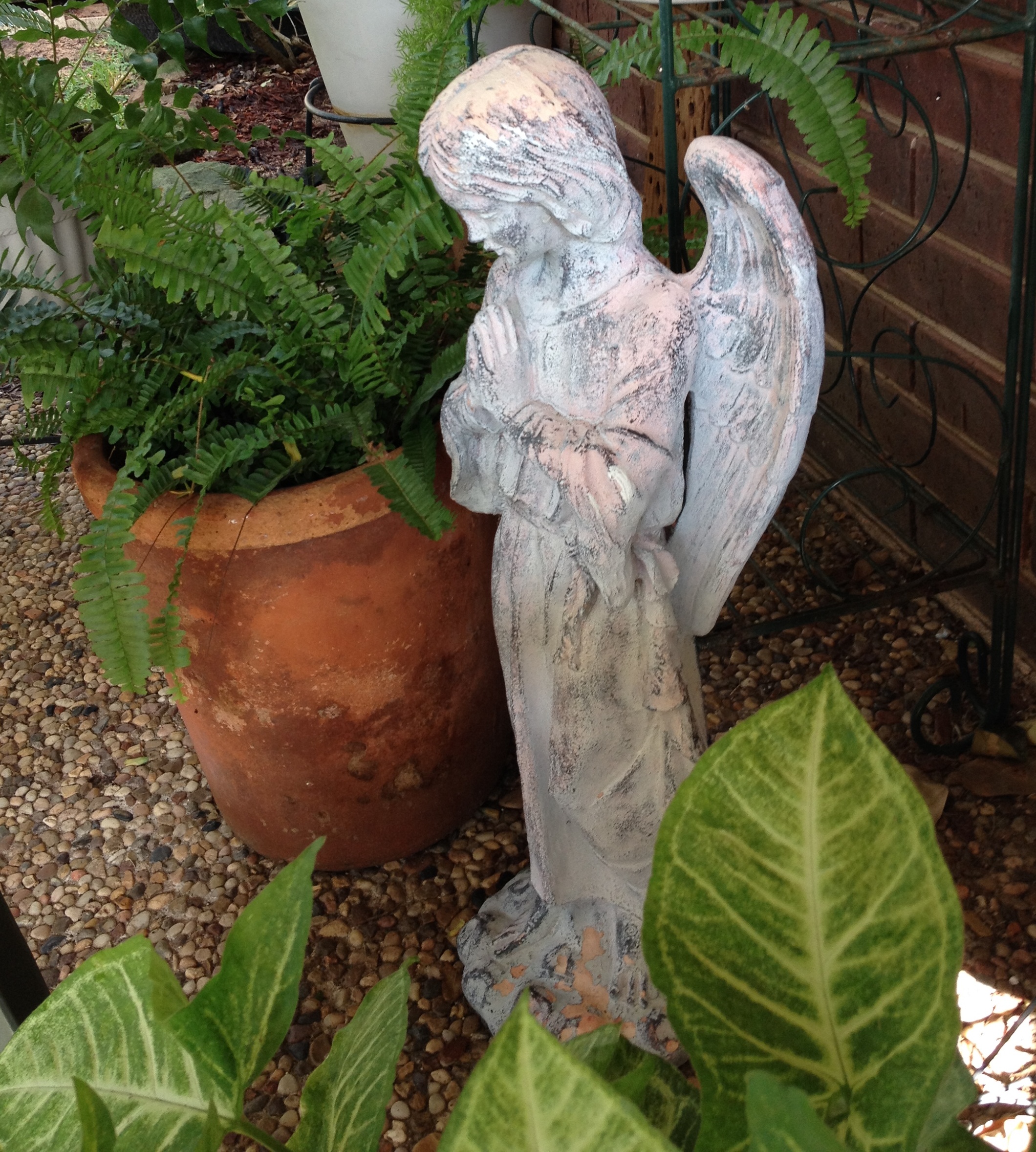
image by Rebekah Choat

image by Rebekah Choat

This prayer was written three years ago, during a time when
my nearly-grown twin sons were in severe crisis, a dark time
of fear and sorrow and helplessness. I offer it today on behalf
of other parents in similar circumstances.

O Lord, help me to realize and remember that, much as I love and cherish and agonize over my children, You love and cherish them so much more than I can begin to comprehend.

You suffered agony for them beyond my imagining. You made them before I ever bore them in my body. You earnestly desire their eternal good – and You have both the understanding of what that is and the ability to bring it about.

Help me day by day, moment by moment, to entrust them into Your hands. I give them, again, into Your care, heavenly Father, asking that the angels have charge over them, to guide them in health and wholeness, in the name of Jesus Christ Your Son.  Amen.

~ Rebekah Choat