What Are We Building?

Words said, left unsaid
I don’t know – are we building
a wall, or a bridge?

–Rebekah Choat

I used to think talking to strangers was the hardest thing. What in the world could I say to someone I didn’t know, someone who didn’t know me and probably didn’t want to?

Now that I’m older, and a little less afraid of my own shadow (not to mention everyone else’s) I’ve learned to make easy small talk with people who cross my path: the librarian and the pediatrician’s nurse and the girl who takes my order at Chick-Fil-A. The hardest conversations are with those who are closest to me, who really matter in my life.

Sometimes the words said are the difficult ones. Between any two people with any length of shared history – parents and children, siblings, longtime friends – there are words that live on and on, casting their shadows down the years even after the speaker or the hearer or both are gone, for better or worse. “You’re just not cut out for that; why don’t you give it up?” can change the course of an individual life, a career, a family’s dynamic. So can, “You really have a way with words (or children, or paint and canvas).” Even harder can be the words that need to be said, that have to be said, awkward and painful and necessary words: “I’m sorry.” “You were right.” “I’m worried about you.” One of the most nerve-wracking, heart-wrenching conversations I’ve ever felt compelled to initiate was with a dear friend who I feared was unwittingly making a misstep that could have adversely affected his credibility, his reputation, his future.

The words left unsaid can cut both ways as well. There’s a particular void in a child’s heart that can only ever be filled by “I’m proud of you,” a certain level of trust that can never quite be reached without “I will always love you, no matter what.” But how fortunate is the teenage girl who’s never heard “You’d be so pretty if you’d just lose ten pounds (or wear different clothes, or do something with your hair).” How blessed is he who can refrain from saying “I told you so.”

Words, like lengths of lumber or blocks of stone, are raw material. They have a certain innate strength and form, but it is the builder who invests them with structure and purpose. They can be arranged in virtually limitless configurations, made the means to reach any end. Words, identical words, can be barriers that separate us or spans that bring us together, depending on intent and interpretation. Silence, too, can be used either way.

A confidence shared. An explanation given. A candid reaction. A confession made. An apology offered and accepted – or refused. A bit of information withheld. A secret kept. An unstated opinion. An affirmation or a condemnation left unspoken.

Any one of these may be a brick laid into the walls that stand between us. Any one of these may be a stepping stone laid into the paths that lead to where our ways meet.
My Life as a Doll, Part Three

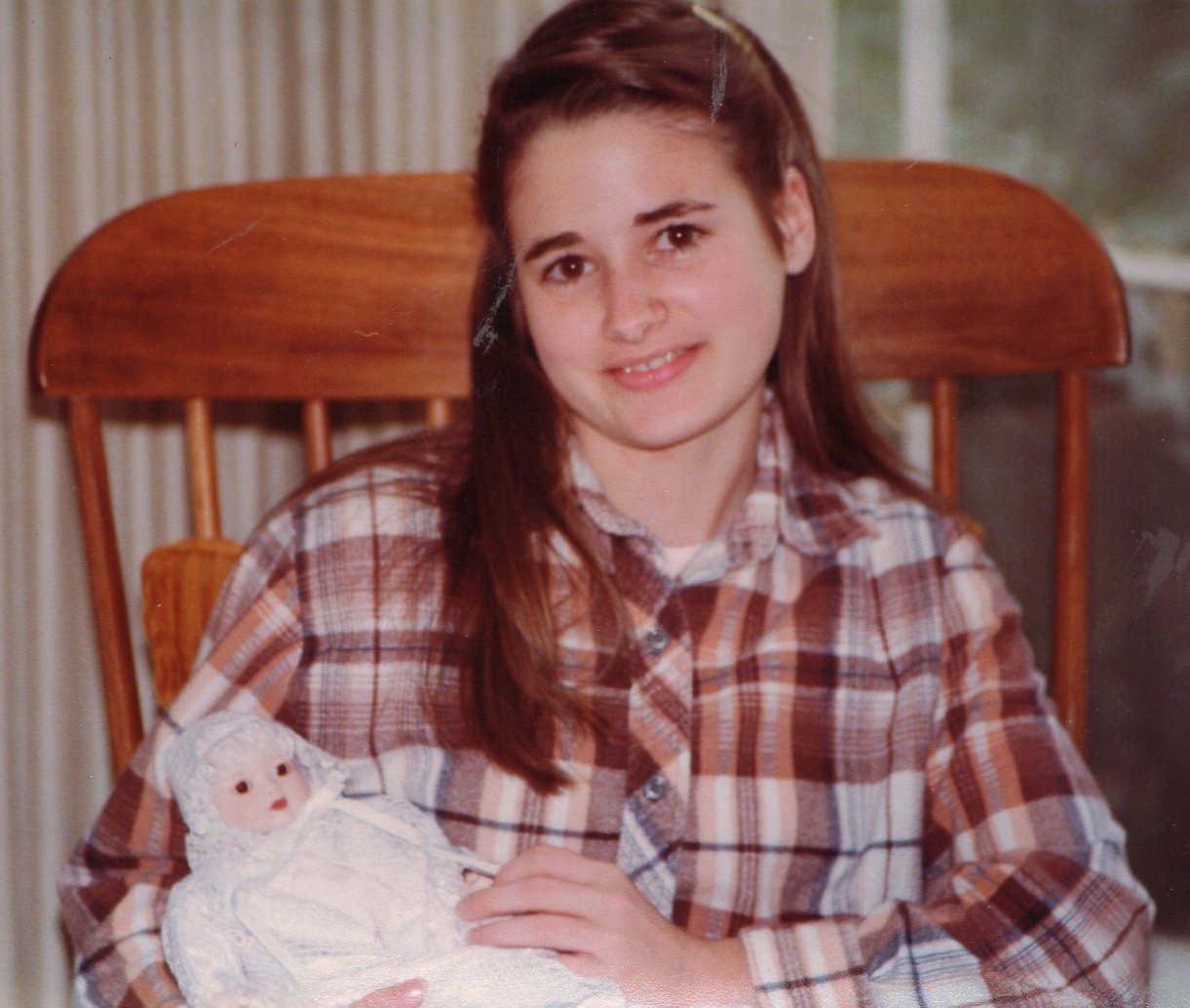
I married at barely past twenty, and for the next decade I functioned more or less acceptably, much like one of those dolls with a pull string on the back of her neck that makes her talk.  I developed a repertoire of stock phrases and behaviors that, if they didn’t quite fit the circumstances, if they didn’t ring exactly true, were yet close enough for people to gloss over and interpret as what they wanted to hear and see.

I didn’t realize it then, but of course the mask works both ways.  The smooth, resilient exterior that prevented people knowing what I mess I was inside also undoubtedly kept me from absorbing much light and love that might have been mine.

Over time, by the grace of God, the polished finish began to wear through in spots, and the pull string started fraying.  Around my thirtieth birthday, I began to wake up inside, began at least to realize that I had been suffocating.

My Life as a Doll, Part Two

img166

By my late teen years, I had packed away my baby dolls and started collecting china dolls.  Daddy was pastoring a little church then.  Most of the twenty-five or thirty congregants were older folks.  Many of them I’d known all my life, but there was an occasional newcomer.  One ‘new’ old gentleman who lived alone became quite active in the church and accordingly spent a fair amount of time with our family.

Frank often told my parents, in my hearing, that I was ‘a little porcelain doll.’  He meant it as the sincerest compliment; it was his way of saying that I was pretty and delicate and well-mannered.

Collectible dolls are usually meticulously molded and constructed, perfectly painted, elegantly dressed.  They are lovely, but not precisely lovable.  They don’t hold up well under the strain of ordinary day-to-day handling.  They are cold, and stiff, and fragile.

At that point in time, I had most of the qualifications for being a china doll.  I wore a vaguely pleasant, noncommittal expression on my face.  I went where I was supposed to go and filled the place assigned to me without argument.  I behaved properly, as expected.  I didn’t talk out of turn.  My feelings were carefully concealed beneath an aesthetically pleasing surface.

My Life as a Doll, Part One

Rebekah's 4th birthday 1

Baby Girl the Second’s ‘big’ Christmas gift last month was a very special doll, one that looks quite a bit like her. For the first couple weeks, Buttercup went everywhere with us, had her hair combed frequently, and was talked about to every friend, acquaintance, and store clerk who seemed even mildly interested (or not).  This daughter of mine has never latched onto one particular necessary-for-breathing doll or stuffed animal or blanket, but it looks like Buttercup is going to be a good friend for a long time, even though the first flush of adoration has worn off a bit.

Naturally, Baby Girl’s interactions with her doll set me to thinking, not only about the dolls who were my particular companions when I was her age, but also about my own experiences as a doll.

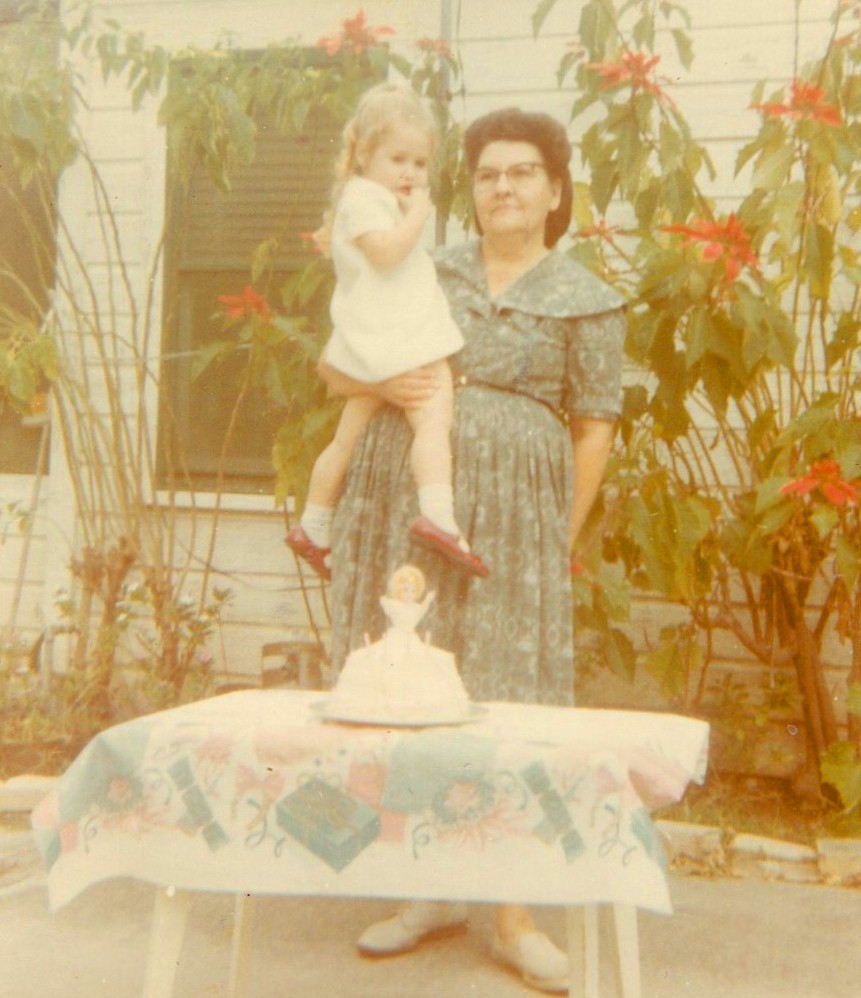
I loved my dollies; they were as tenderly cared for as a little girl knew how:  bathed and dressed and tucked in carefully at night.  But even more, I loved Grandma, and I was her dolly.  That was what she called me when I was small, and I was supremely happy and secure in the inarticulate but clear understanding that I was cherished and delighted in.

We moved a state away from Grandma when I was five.  She and I remained close always, but I had outgrown being her dolly by the time we lived near each other again.  That’s what happens, of course.  Little girls grow up, and their relationships change and mature.  They don’t relate to either their grandmothers or their dolls the same way when they are teenagers that they did when they were toddlers.  But that innocent assurance of being treasured, just by being, still seems to me a grievous loss.

Friends, Finally

We are friends now, at last.  I’d say I’ve known them all my life, but it isn’t true, really.  I’ve identified them by sight, certainly, for as long as I can remember, but I refused to acknowledge them for years.  I’d shut my eyes and turn my head away, enduring their visitation in stony, jaw-set silence; or rage in hot tears at their intrusion.

But eventually anger runs out, and I realized that if we are going to meet regularly — and we undoubtedly are — it might as well be on amicable terms.  I gave up trying to avoid them, stopped resisting their company.

Now we sit together in a companionable silence most days.  They offer me a space for reflection and contemplation, and a first sounding board for ideas I’m not yet ready to share with anyone else.  I’ve come to truly value my time with four and five.

‘The Confession of a Lifelong Insomniac, Rebekah Choat, composed between 5:17 and 5:54 a.m., November 10, 2012’

Working Toward the Center

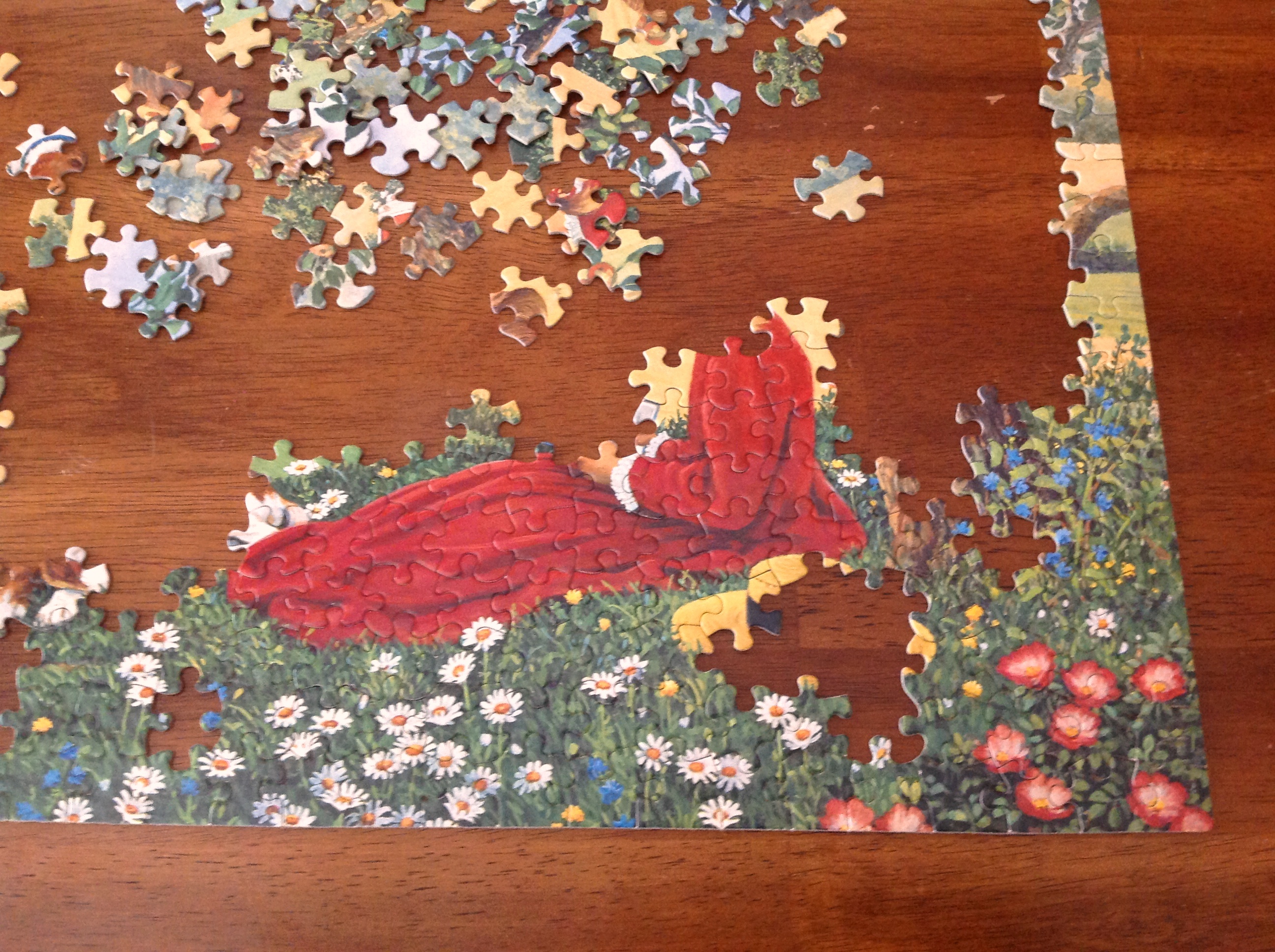
puzzle

I’ve liked doing jigsaw puzzles since I was a little girl, maybe because I was a strange, solitary child who preferred playing alone; maybe because I was shy and uncoordinated and not good at tag or dodgeball; maybe because it gave me a sense of power and accomplishment to be able to manipulate little pieces of cardboard into a picture that meant something and was beautiful into the bargain.

In a lot of ways life seems like a giant jigsaw puzzle to me, one with 25,000 tiny pieces and the picture on the box missing.  I know the basic parameters – four corners, find the straight edges and build the frame first.  That much I’ve managed, by the grace of God and with a lot of help, in 45 years.  I know what my foundational values are, what beliefs make up the framework and structure of my life.

Now I’m in the process of filling in the outlined space, working toward the center.  I have some idea, based on the colors and shapes I can discern, what the finished picture may look like, but there are some pieces that don’t match the pattern I have in mind, and I can’t imagine how they are going to fit.

I’m generally not half bad at working puzzles.  I have a knack for seeing connections; sometimes I can tell at first glance which piece comes next in a section under construction.  But there are also times when I’m completely stumped, and the only way to proceed is by trial and error – pick up a piece that looks like it might work, try it this way, turn it around and try it that way, discard it and pick up the next piece that looks likely, repeat until something snaps in place.

Even this method isn’t foolproof.  Once in a while I get a piece that is the same color as the ones I’ve already put together, and it seems to be shaped properly to fit the space, but when I try to connect it something just isn’t quite right.  There’s a minute gap where there shouldn’t be, or a slant that’s a few degrees off, or some bit that juts out into an area where it clearly doesn’t belong.

Occasionally, the misfit is virtually imperceptible, and I don’t recognize it until some time down the line, when the initial shift away from true has sent everything else askew.  Then the only thing to be done is take apart the pieces that were built onto the false connection and set them aside to be worked in again later at the proper time and place.  Pushing forward without correcting the error, forcing unnatural conjunctions, only results in distortion and damage.

Some days the process is very frustrating, and I just want to throw out the pieces that don’t seem to fit, or quit working on it altogether.  But a still, small voice encourages me not to give up, that it will all come together someday, to keep working toward the center bit by bit.