Shadows, Part Three

img169

shadow:  a state of ignominy or obscurity

ignominy:  public shame or disgrace

obscurity:  the state of being unknown, inconspicuous or unimportant; the state of being difficult to understand

Despite the progress made over the past several decades in both the medical community and the general public toward better understanding mental health, any form of psychological disease still carries a stigma in some churches and some families.

My first major depressive episode began when I was seventeen.  My mother and I talked about it, once.  The only ‘solution’ she offered was that I could go talk to the youth pastor.  I didn’t; I already knew well enough that in that church, at that time, it was understood that Christians had no reason to be depressed, and if I just prayed about it I’d feel better, and if I didn’t feel better I was harboring some wrong in my heart that I needed to confess and pray through.

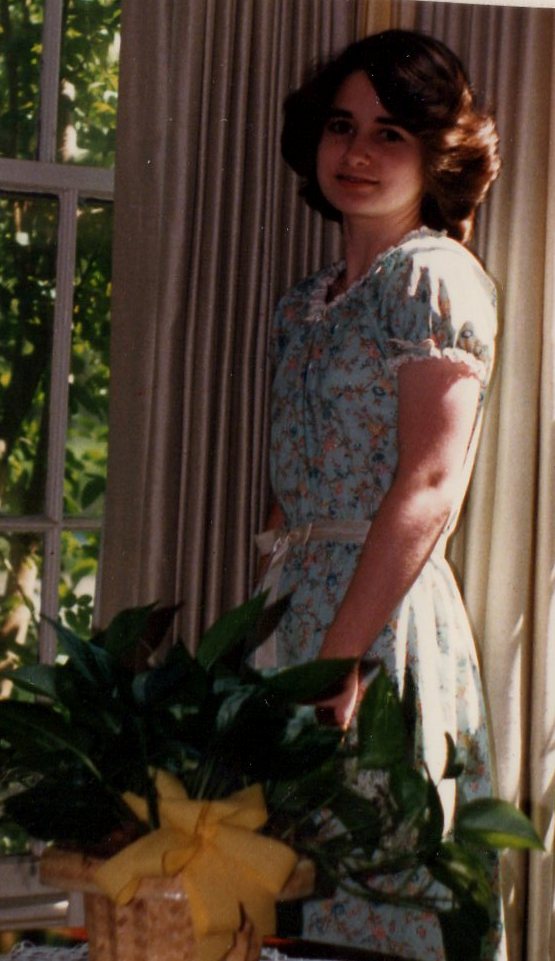
So rather than exposing myself to certain lack of understanding, rather than bringing down disgrace and shame upon myself and my family, I put up an acceptable façade and made my true self as inconspicuous as possible.  Thus began a years-long sojourn in the shadows, during which the real Rebekah shrank to an unknown entity, even to myself.

My Life as a Doll, Part Two

img166

By my late teen years, I had packed away my baby dolls and started collecting china dolls.  Daddy was pastoring a little church then.  Most of the twenty-five or thirty congregants were older folks.  Many of them I’d known all my life, but there was an occasional newcomer.  One ‘new’ old gentleman who lived alone became quite active in the church and accordingly spent a fair amount of time with our family.

Frank often told my parents, in my hearing, that I was ‘a little porcelain doll.’  He meant it as the sincerest compliment; it was his way of saying that I was pretty and delicate and well-mannered.

Collectible dolls are usually meticulously molded and constructed, perfectly painted, elegantly dressed.  They are lovely, but not precisely lovable.  They don’t hold up well under the strain of ordinary day-to-day handling.  They are cold, and stiff, and fragile.

At that point in time, I had most of the qualifications for being a china doll.  I wore a vaguely pleasant, noncommittal expression on my face.  I went where I was supposed to go and filled the place assigned to me without argument.  I behaved properly, as expected.  I didn’t talk out of turn.  My feelings were carefully concealed beneath an aesthetically pleasing surface.

Poetry as Therapy

A recent study shows that reading classic literature induces a higher-than-usual level of brain activity, and that poetry can ‘affect psychology and provide therapeutic benefit.’

http://www.dailymail.co.uk/sciencetech/article-2261636/Reading-Shakespeare-Wordsworth-offer-better-therapy-self-help-books.html

I can personally attest to at least some of these findings; poetry has most certainly provide(d) therapeutic benefit in my life, particularly the past couple years.  Reading poetry, memorizing it, reciting it, talking about it with friends, writing it, writing about it — in all these ways, poetry helps me find my self and my way.

The Shadow

DSC_0867

The word “shadow” has sixteen definitions or shades of meaning in my dictionary.  One of them is simply “darkness.”  In turn, darkness has a number of different nuances.  The natural physical darkness of night is both an invitation and a facilitator for our bodies to rest.  But that same night-darkness is feared by my young daughter, making many nights uncomfortable and unrestful, leaving me exhausted at dawn.  This weariness then makes me vulnerable to the darkness of depression, which seems always to hover nearby, ready to seep in through any crack in my defenses.  A friend of mine, who understands this struggle well, refers to depression as “the shadow.”

I’ve gradually become aware, the past few years, that the depression which assails me has a component of seasonal affective disorder – these darker days and longer nights of winter take a vague but noticeable toll on me.

Yet, in my heightened awareness at this season, I have found unexpected, sometimes startling, redemptive ways of looking at darkness.  T.S. Eliot says to let “the darkness of God” come upon you.  C.S. Lewis’s hero Ransom finds the darkness on Perelandra dense with the presence, the spirit of God.  George MacDonald notes that “all things seem rushing straight into the dark, but the dark still is God.”  And, as J.R.R. Tolkien’s Samwise Gamgee realizes, looking up out of the forsaken land, a star shines most brightly against the darkest sky.