Yesterday I thought
that I would weep forever.
Now tonight I know
there is nothing left in me —
no tears, no sighs, not a word.
~ Rebekah Choat
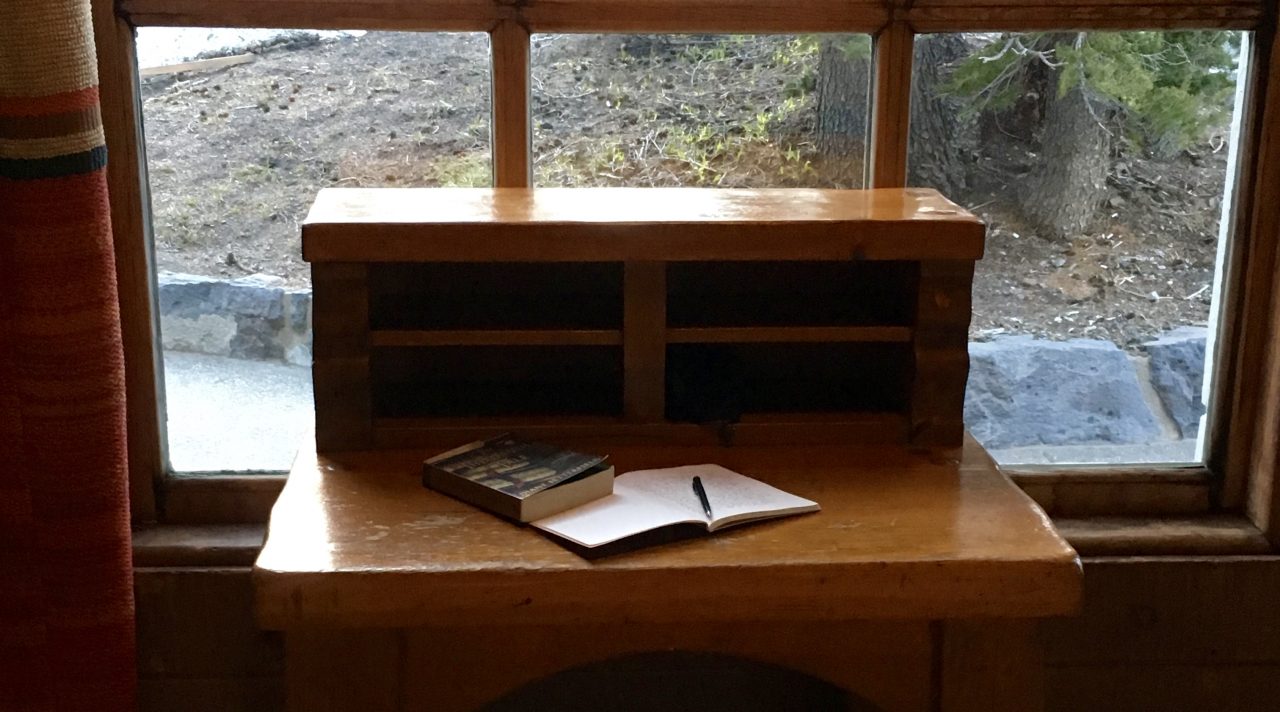
Yesterday I thought
that I would weep forever.
Now tonight I know
there is nothing left in me —
no tears, no sighs, not a word.
~ Rebekah Choat
The day grows darker still, and still the clouds won’t loose the rain.
How much anticipation must be borne before the pain?
~ Rebekah Choat
I’d like to tell you
my earliest memory of stars:
dozens of dozens of diamonds
scattered freehand
on a velvet midnight sky
above a gentle sea,
the delicate acoustics
of salt and sand and surf
supporting the soaring chorus
of the Pleiades.
I’d like to tell you
that’s how it really was —
so much lovelier than
bits of gilt paper
and paste stuck carefully
into squares within squares
on the beige Sunday School wall.
~ Rebekah Choat
All is quiet; not quite still.
A mourning dove repeats his trill,
“I am here, I am here.”
The sun is chary of the sky.
A sparrow ventures to reply,
“Right here, right here, right here.”
Though it’s morning, light is dim.
Shadows are approaching Him,
drawing near, drawing near.
Clouds grow darker through the day.
A freshening wind touches His face.
He swallows down His fear.
Evening dies into the West.
His heart knows, and His jaw is set.
The way ahead is clear.
At table with the ones He loves,
outside the walls He hears the dove
again call, “I am here.”
~ Rebekah Choat
mystery: something kept secret or remaining unexplained; something not understood or beyond understanding
Baby Girl the Second likes ‘mystery’ stories these days, which leads me to musing about the disparity between the common usage and the true meaning of the word. Of course, the problems presented to the small town backyard detectives whose adventures she follows are never for a minute intended to remain unexplained and invariably prove to be quite understandable to one who reads the clues carefully. No mystery will remain unsolved for more than five pages or a 24-minute television slot, not with Tyrone and Uniqua or Encyclopedia Brown and Sally on the case. In a few years, she’ll discover that Sherlock Holmes and Miss Marple are equally reliable in their somewhat lengthier settings.
I have nothing against a good whodunit, although I do wish the genre would be categorically renamed ‘detective’ literature. The problem I see is that we have reduced the – well, mystery of mystery, to the point of excluding any eventuality that remains beyond human understanding. We really believe that if we are observant and resourceful and analytical enough, we can solve any conundrum. When we do run up against something that we absolutely can’t explain, we tend to shrug our shoulders, say “It’s a mystery to me,” and turn and walk away, dismissing anything we can’t define and diagram neatly as not worthy of our attention.
During this Holy Week, this time of remembrance and meditation, I am conscious of both a desperate hunger for and a deep rest in a Presence far beyond my comprehending. God grant me the grace to open myself to the mystery of Christ: Christ in us, Christ in me, in you, the hope of glory.
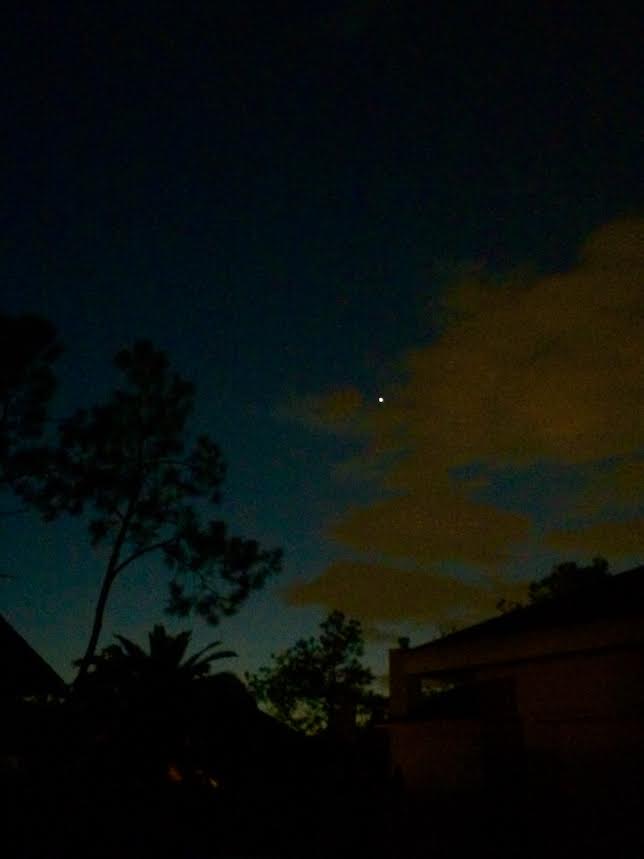
image by Rebekah Choat
Dark is drawing in
under faintest veil of mist.
A single star is
shining over dusk-rose clouds
as crickets hum evensong.
~ Rebekah Choat
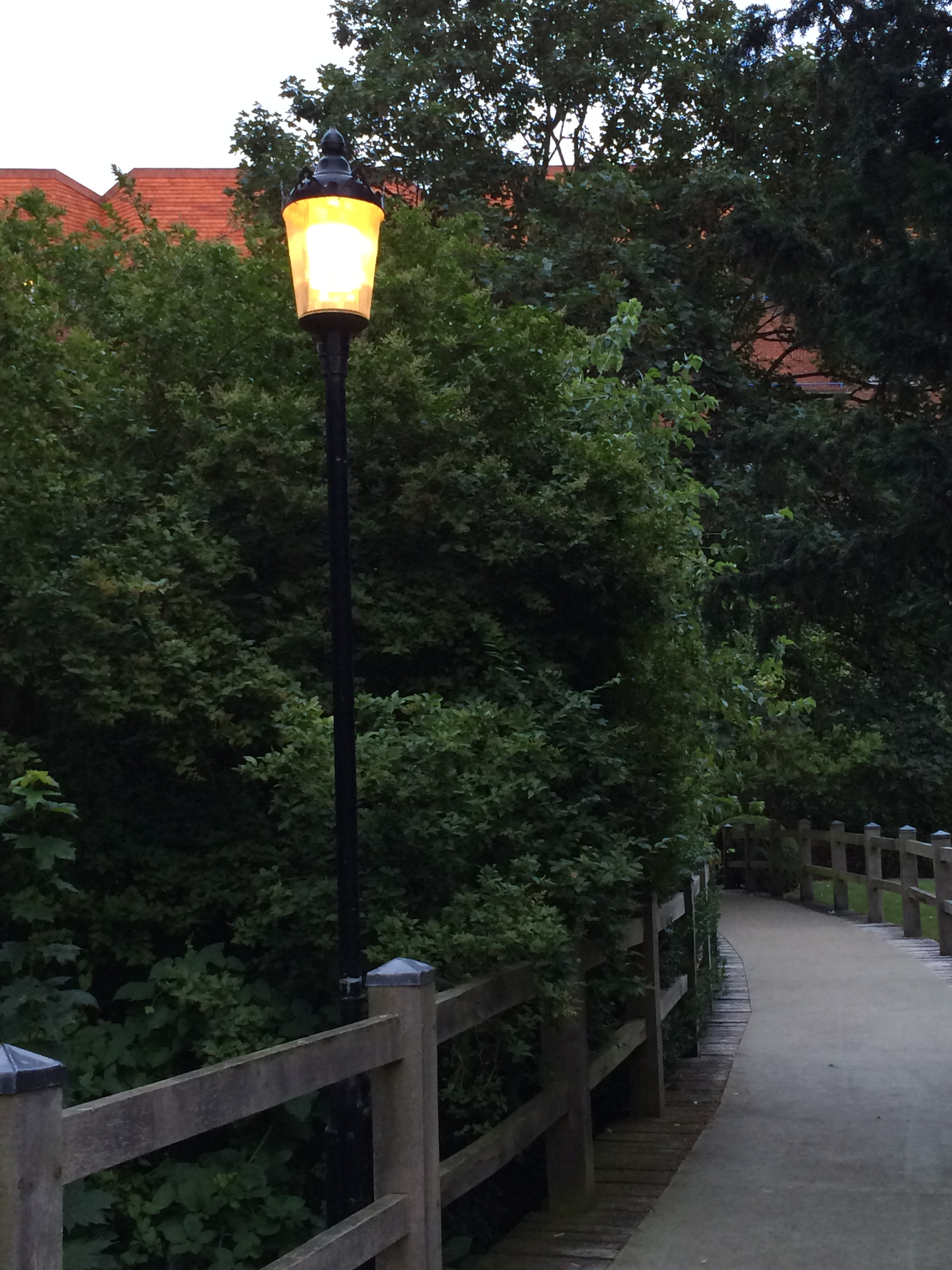
image by Rebekah Choat
Familiar shadow, in whose company
I travel often in the failing light,
your presence has no terror left for me:
we simply walk, as long companions might,
in silence. We move slowly through the rain
and cold, and even when the sun comes out,
its brightness only serves to make more plain
your shape beside me. You linger about
my campsite, or just up around the bend,
ready to join me as I journey on.
You stay with me, as faithful as a friend,
not always close, but never really gone.
So now as morning breaks in clouds of grey,
we’ll go as fellow-travelers on our way.
~ Rebekah Choat
truth: the state of being the case; the property of being in accord with fact or reality
fact: something that has actual existence; a piece of information presented as having objective reality
What is truth?
The question has been under examination of late in a small group of which I am part, and this past week I ventured to comment that truth and facts are not necessarily the same – only to find that I was ill-prepared to articulate to someone of a more analytical bent than myself precisely what I meant.
So here I am, taking another go at it.
Facts are concrete things. They can be tied to a place on the map, or a date on the calendar, or a documented event.
Facts are also fluid, though. They can change over time. They are dependent upon certain conditions. They can be acted upon by outside forces which may alter them.
For example: as a matter of fact, I have long, dark brown hair. Except in certain lighting, where it’s auburn. Except for the streaks that are silver. Except in old photographs of a younger me, where it’s short. And in even older photographs of a much younger me, where it’s blonde.
Truth is incorporeal. It cannot be anchored down in the same way that a fact can. It is eternal – it does not evolve or erode, despite the passage of aeons. It is consistent, regardless of conditions. It remains the same in light and darkness, heat and cold, stillness and storm.
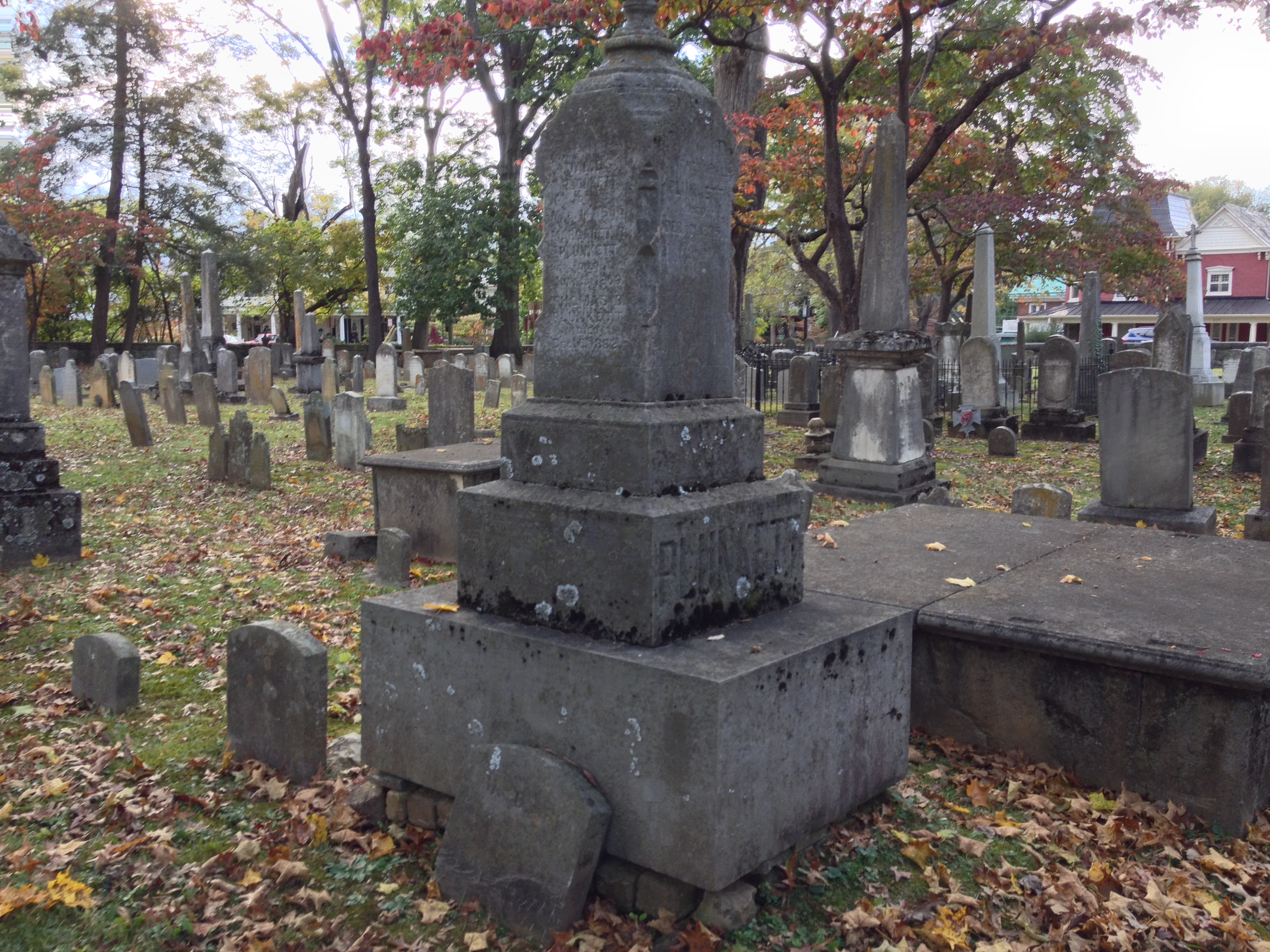
image by Rebekah Choat
Turn toward the holocaust, it approaches
on every side, there is no other place
to turn. Dawning in your veins
is the light of the blast
that will print your shadow on stone
in a last antic of despair
to survive you in the dark
Man has put his history to sleep
in the engine of doom. It flies
over his dreams in the night,
a blazing cocoon. O gaze into the fire
and be consumed with man’s despair,
and be still, and wait. And then see
the world go on with the patient work
of seasons, embroidering birdsong
upon itself as for a wedding, and feel
your heart set out in the morning
like a young traveler, arguing the world
from the kiss of a pretty girl.
It is the time’s discipline to think
of the death of all living, and yet live.
~ Wendell Berry
icon: a painting of Jesus Christ or another holy figure, typically in a traditional style on wood, venerated and used as an aid to devotion; or
a person or thing regarded as a representative symbol of something
Icons are a fairly new concept to me. If they were mentioned at all in the anti-liturgical faith tradition in which I was raised, they were cast in a negative light. My working definition of the word prior to this present decade, had I thought about it, might have been “a thing made to represent God – maybe not quite synonymous with ‘idol,’ but dangerously, wickedly close.”
It was one of my favorite authors, Madeleine L’Engle, who piqued my interest in liturgy and ritual and orthodoxy and iconography a few years ago, first through her fiction, most notably An Acceptable Time, and later in her excellent study of icons and idols, Penguins and Golden Calves, in which she says, “An icon is something I can look through and get a wider glimpse of God…saying something that cannot be said in words…It transcends our experience and points us to something larger and greater and more wonderful.”
The understanding of an icon as something that affords me a ‘wider glimpse of God’ is predominant in my awareness now in the early days of Lent.
 Becka's Blog