What Do You Mean?

13006_483494761699740_227830721_n

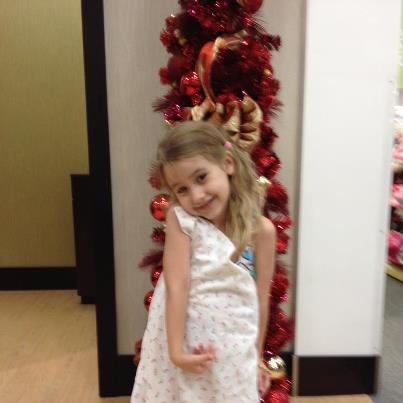
I had an argument a little while back with my then-five-year-old daughter.  We were in a department store, waiting while her older sister tried on clothes.  Baby Girl the Second had carried a blanket in with her, and was passing the time playing dress-up herself, draping it this way and that, posing, asking, “Don’t I look divine?”  The gentleman waiting for his wife shot a bemused glance our way when I answered, “No, divine is what God is.  You’re pretty.”  This went on for several minutes, with BGS declaring ever more emphatically, “Well, divine means pretty to me.”

I got the feeling that the waiting gentleman thought I was being rather legalistic with a small child on a matter that wasn’t really important.  And I have a pretty good idea which of BGS’ books planted the mis-definition in her head – a cute series about a little girl who loves big, fancy words and defines them parenthetically, but now that I think of it, not always very accurately, for her audience.

What’s the big deal?  No kingdoms are going to rise and fall on the misuse of a word by a five-year-old girl in greater suburbia.  I understand that.  And despite my upbringing, I don’t actually believe we’re likely to be struck by lightning due to an accidental misappropriation of an attribute of the Almighty.  But the erosion of language is a big deal.

Words matter.  Words contain and convey power, and words have precise meanings, and the gradual alteration of the meanings dilutes or redirects the power.  As the process goes on, the current usage of a word may be so far removed from its original intent as to render it virtually meaningless.  Gentleman, for instance.  It once described a very specific status, that of being well-educated, well-bred, and well-to-do.  The world has changed, and perhaps it’s of little consequence that gentleman now indicates simply a nice, well-mannered, preferably well-groomed, person of the male gender.  And how about nice, while we’re here?  It used to mean fastidious, exacting of great precision.  Maybe it’s not earth-shaking that today, as C.S. Lewis points out in the preface to Mere Christianity, “it no longer tells you facts about the object:  it only tells you about the speaker’s attitude to that object.  (A ‘nice’ meal only means a meal the speaker likes.)”

The subtle shift of the meanings of other words, however, can have far-reaching effects.  Think about toleranceEqualityChristian.  What happens when freedom means one thing to you, and a different thing to me?

This piece was first published as “The Power of Words, Part Three” on http://www.booksbybecka.com on October 16, 2012.
Words as Weapons

It’s pretty obvious that words spoken to – or shouted at – or whispered about – us can inflict harm.  Words can be wielded as weapons in a number of ways.  But casualties are not always the result of direct frontal assault, covert sniper fire, or even espionage.  Sometimes we are laid waste by siege.  What is withheld weakens us to the breaking point.

Some of the people who hurt us the most, and the deepest, can honestly claim never to have said a negative word to or against us.  But they haven’t said anything positive either, and the words never said can leave a gaping void.  It’s good of them, maybe, not to mention our mistakes.  It’s cold of them not to acknowledge our successes.  Refraining from tearing down is not the same as building up.

This piece was first published as “The Power of Words, Part Two” on http://www.booksbybecka.com on October 9, 2012.

How to Fly

There is a trick to flying; the angels told me so:
the first step is forgetting everything you know.

Hating the earth you stand on can almost make you fly,
but it never quite will — you have to love the sky.

–a found poem by Rebekah Choat, drawn from Anne Fortier’s Juliet

Sticks and Stones

2013-02-18 15.30.45

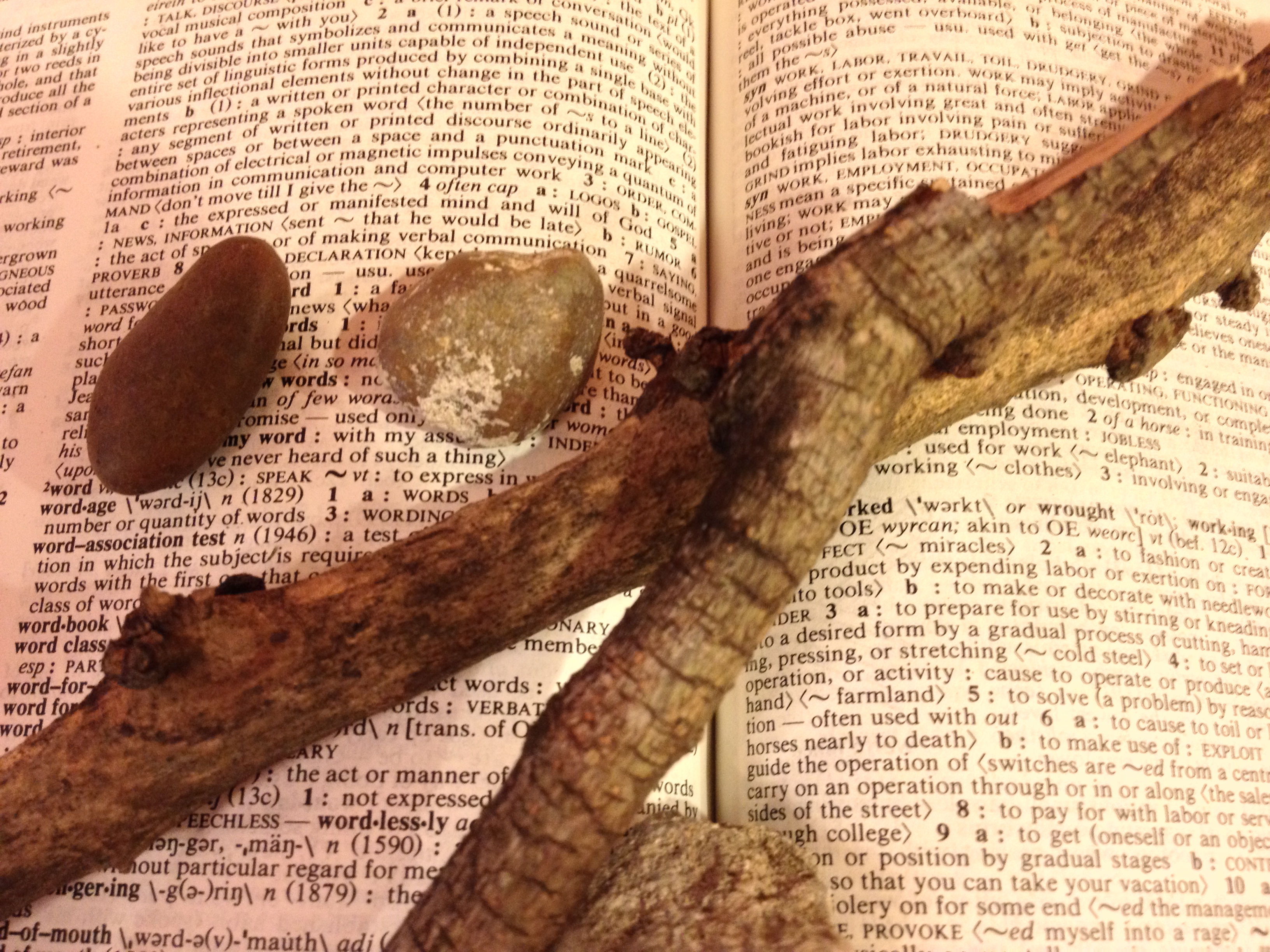
I believe strongly in the power of words.  I’m sure whoever – I always imagine it was a frazzled mother trying to comfort a distraught child – first spoke that ditty about sticks and stones meant well, maybe even believed it herself, but she was sadly mistaken.  Words can inflict deep wounds that take much longer to heal than broken bones do, perhaps precisely because the word-wounds are so deeply hidden and therefore not recognized and treated.  We’re taught to brush away insults, to shrug off epithets.  I think something in that shrugging motion actually causes the barbs to work further in under our skin, where their poison seeps into our bloodstream.  But we don’t mention our discomfort, won’t let ourselves succumb to the “weakness” of admitting our disease.

Sometimes we can pull it off.  We’re strong enough to absorb small stings with minimal lasting damage.  Some of us, sometimes, are so tough that we walk around with embedded shrapnel, trying not to limp and pretending that we aren’t in pain.  But some of us have been pierced with words like Morgul-blades:  the skin has closed over the wound quickly, leaving only a small white mark; but the scar conceals a deadly splinter, festering, working its way inwards.  If that malicious fragment is not found and excised, it will destroy us.

We are rarely, if ever, able to perform the operation ourselves.  We are too bewildered to recognize what needs to be done, too lost in pain to be able to focus our attention on the precise source of the infection, too weak and fearful to begin the excruciating process.  This is one of the many reasons it is vital for us to live in community, to surround ourselves with trusted friends who can often see our wounds more clearly and objectively than we can; who will encourage us, even carry us if necessary, to seek help and healing; who will sit with us and hold our hands through the dark, painful hours, speaking words of light and life.

This piece was first published as “The Power of Words” on http://www.booksbybecka.com on October 4, 2012.

My Life as a Doll, Part Three

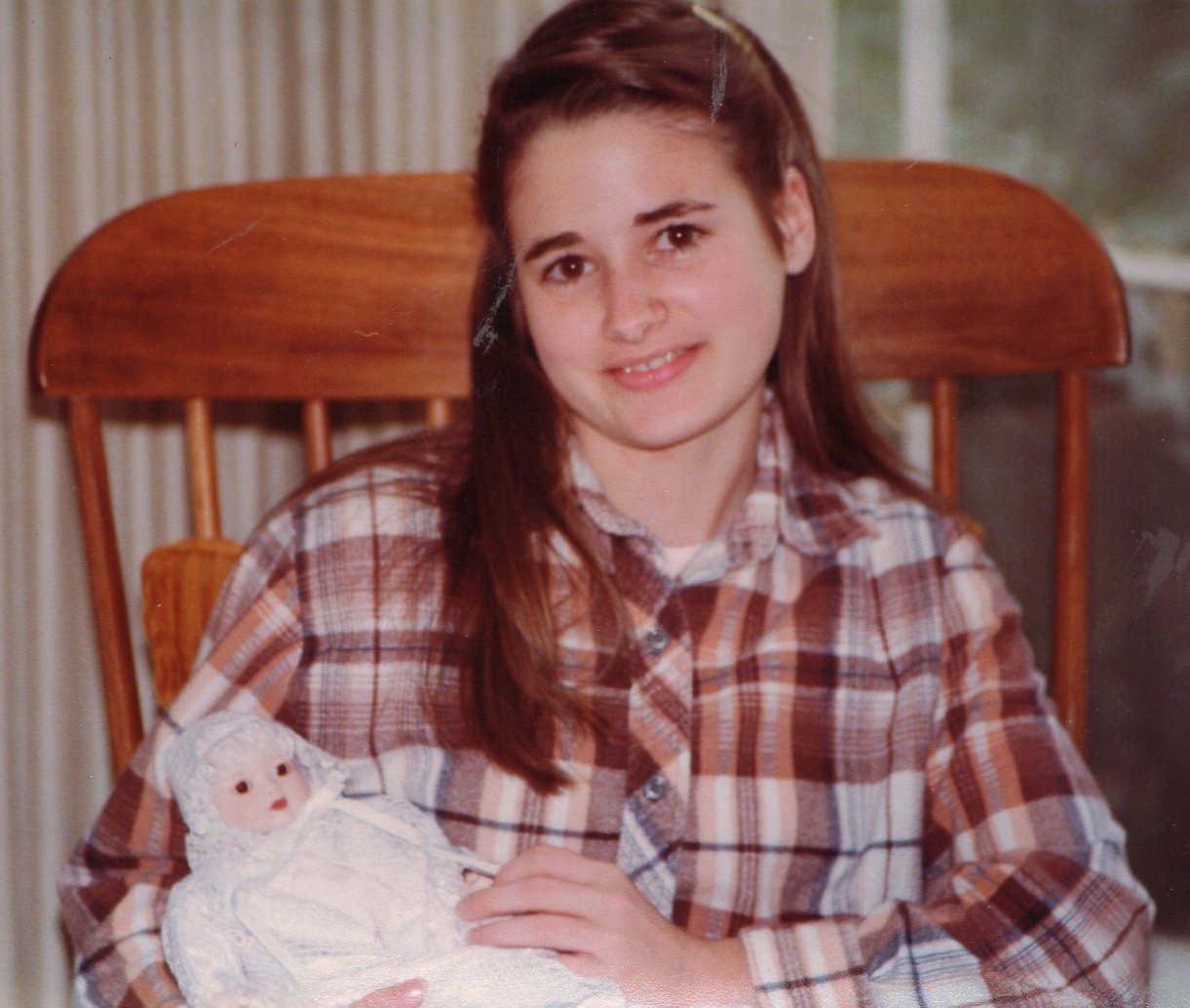
I married at barely past twenty, and for the next decade I functioned more or less acceptably, much like one of those dolls with a pull string on the back of her neck that makes her talk.  I developed a repertoire of stock phrases and behaviors that, if they didn’t quite fit the circumstances, if they didn’t ring exactly true, were yet close enough for people to gloss over and interpret as what they wanted to hear and see.

I didn’t realize it then, but of course the mask works both ways.  The smooth, resilient exterior that prevented people knowing what I mess I was inside also undoubtedly kept me from absorbing much light and love that might have been mine.

Over time, by the grace of God, the polished finish began to wear through in spots, and the pull string started fraying.  Around my thirtieth birthday, I began to wake up inside, began at least to realize that I had been suffocating.

Shadows, Part Three

img169

shadow:  a state of ignominy or obscurity

ignominy:  public shame or disgrace

obscurity:  the state of being unknown, inconspicuous or unimportant; the state of being difficult to understand

Despite the progress made over the past several decades in both the medical community and the general public toward better understanding mental health, any form of psychological disease still carries a stigma in some churches and some families.

My first major depressive episode began when I was seventeen.  My mother and I talked about it, once.  The only ‘solution’ she offered was that I could go talk to the youth pastor.  I didn’t; I already knew well enough that in that church, at that time, it was understood that Christians had no reason to be depressed, and if I just prayed about it I’d feel better, and if I didn’t feel better I was harboring some wrong in my heart that I needed to confess and pray through.

So rather than exposing myself to certain lack of understanding, rather than bringing down disgrace and shame upon myself and my family, I put up an acceptable façade and made my true self as inconspicuous as possible.  Thus began a years-long sojourn in the shadows, during which the real Rebekah shrank to an unknown entity, even to myself.

Coffee and Poetry

IMG_0044

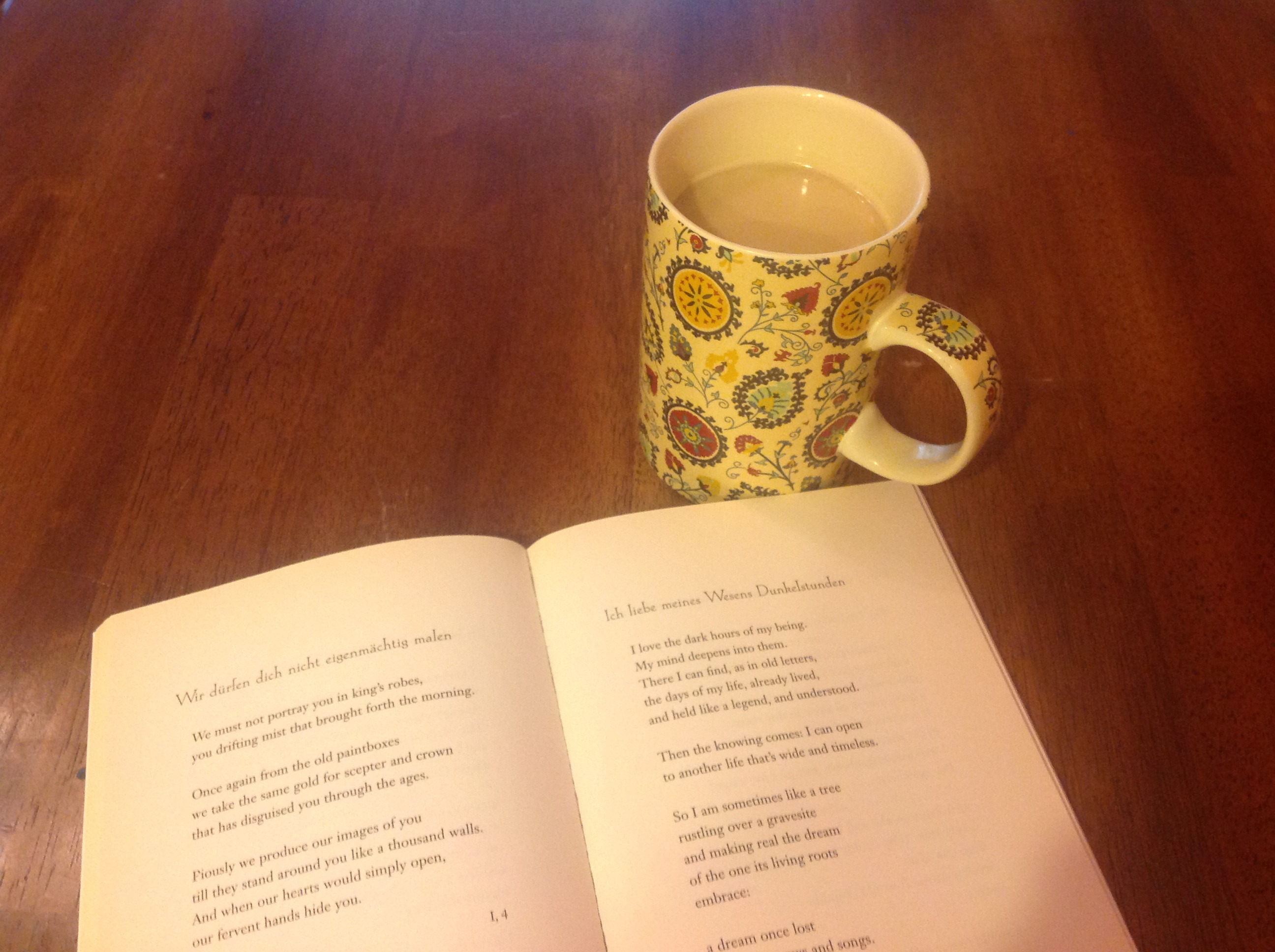
I drink coffee every morning; almost every afternoon, too.  Coffee just makes things better, and I feel its absence keenly if I don’t have it.

A good cup of coffee is a complex elixir, a number of lovely qualities perfectly and inseparably blended; however, one attribute may take prominence over the others at certain times.  On cold early mornings, its warmth is of utmost importance.  Most days, its aroma and flavor are most attractive to me.  Sometimes the caffeine boost is my primary reason for reaching for a cup.  And on occasion coffee is a social drink, a backdrop for friendly conversation or companionable silence.

Poetry, I find, is much like coffee.  It is part of my rhythm, and I get off kilter if I don’t read or write or recall some each day.  Sometimes comfort is the most vital aspect; being wrapped in well-worn words calms and soothes me.  Many days, I find simple joy in the taste of the syllables on my tongue.  Often it is a stimulant, inspiring me in my own work.  And at times poetry is a community event, drawing diverse people into a place where they can relate to each other.

My Life as a Doll, Part Two

img166

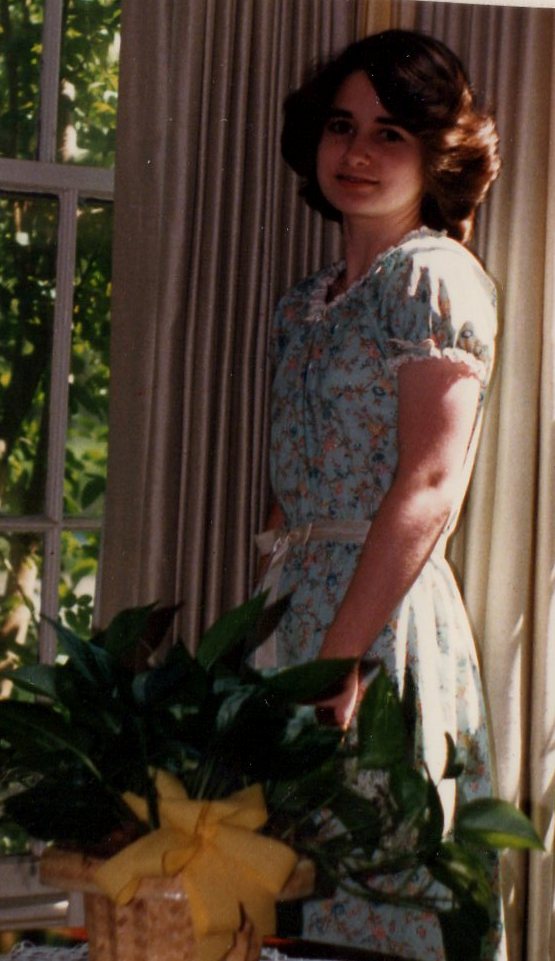
By my late teen years, I had packed away my baby dolls and started collecting china dolls.  Daddy was pastoring a little church then.  Most of the twenty-five or thirty congregants were older folks.  Many of them I’d known all my life, but there was an occasional newcomer.  One ‘new’ old gentleman who lived alone became quite active in the church and accordingly spent a fair amount of time with our family.

Frank often told my parents, in my hearing, that I was ‘a little porcelain doll.’  He meant it as the sincerest compliment; it was his way of saying that I was pretty and delicate and well-mannered.

Collectible dolls are usually meticulously molded and constructed, perfectly painted, elegantly dressed.  They are lovely, but not precisely lovable.  They don’t hold up well under the strain of ordinary day-to-day handling.  They are cold, and stiff, and fragile.

At that point in time, I had most of the qualifications for being a china doll.  I wore a vaguely pleasant, noncommittal expression on my face.  I went where I was supposed to go and filled the place assigned to me without argument.  I behaved properly, as expected.  I didn’t talk out of turn.  My feelings were carefully concealed beneath an aesthetically pleasing surface.

Outdoor Communion

image courtesy stock.xchng

image courtesy stock.xchng

The Branch Delicate
E.B. White, Trees of Winter

Oh, they are lovely trees that wait
In the still hall of winter,
Silent and good where the Good Planter
Fixed the root, wove the branch delicate.

Friendly the birches in the thin light
By the frost sanctified,
And here, too, silent by their side,
I stand in the woods listening, upright,

Hearing in the cold of the long pause
Of the full year
What trees intend that I should hear:
Interpretations of old laws…

Hearing the faint, the chickadee cry
Of root that molders,
Of branch bent, and leaf that withers
And little brown seed that does not die.

The cadence of this poem transports me to a great open-roofed cathedral, in which the trees are the pillars and the Planter the unseen celebrant.  I stand under the bare, arching branches, the only human for miles, wrapped in a solitude dense with an almost-tangible Presence.

 It is good to be here, just to breathe, just to be.   All shall be well.  It is good to know that this is the place ordained for me to be, for a season.  All shall be well.  It is good to commune with the trees in this vast stillness, to partake in the mystery of the falling leaf and the moldering root and the seed biding its time.  All manner of thing shall be well.

This piece was originally posted on http://www.allninemuses.wordpress.com, the lovely blog of a lovely lady, Kelly Belmonte, without whose encouragement I would not be where I am today.